
This article is for learning only. It is not medical advice. Talk to a doctor before you try any peptide.
What happened?
On October 28, 2026, Health Secretary Robert F. Kennedy Jr. made a big change. Now doctors can prescribe six peptides, and special drug stores can make them. Before this, the government had said these drug stores should not make them.
What is a peptide?
A peptide is a tiny chain of building blocks called amino acids. Your body makes peptides all the time. They act like messengers. They tell parts of your body what to do.
Some medicines you may know, like insulin, are peptides. But the six peptides in this news are not approved by the FDA. The FDA is the group that checks if medicines are safe and if they work.
Which peptides are they?
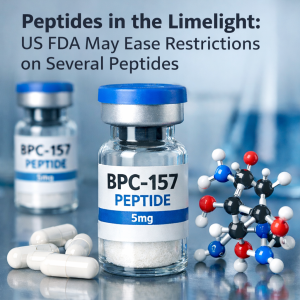
- BPC-157 — people use it to help injuries heal. It can be a shot, a pill or a cream.
- TB-500 — people use it to help muscles and tendons heal. It is a shot.
- KPV — people use it to calm swelling in the gut or skin. It can be a pill or a cream.
- Semax — people use it for focus and the brain. It is a nose spray.
- MOTS-c — people use it for energy and how the body burns fuel. It is a shot.
- Epitalon — people use it for sleep and aging. It is a shot.
Most people who try these peptides want to heal an injury faster. But most of the proof comes from tests on animals, not people. We do not know for sure if they work in people.
What are the rules?
There are rules to help keep people safe:
- You need a doctor’s prescription made just for you.
- The drug store must buy the peptide from a company the FDA has checked.
- Each batch must be tested to show what is in it and that it is clean.
- Each bottle can have only one peptide in it.
- If someone gets very sick from a peptide, it must be reported to the FDA.
Why are some scientists worried?
Scientists at the FDA did not want this change. They said:
- There are very few studies in people.
- Some batches are not made the same way each time.
- Some people could have a bad reaction, like an allergy.
An HHS spokesperson said this change does not mean the peptides are approved, safe or proven to work.
What should you do?
- See a real doctor. Do not buy peptides on your own.
- Stay away from “research use only” peptides sold online. No one checks what is in them. One test found a store-bought peptide had no peptide in it at all.
- Ask to see the test results for your peptide.
- Plan to pay yourself. Insurance will probably not pay for it.
- Ask questions. Will this help my problem? What side effects can it cause? How will we know if it works?
What happens next?
This rule is not final. It stays until the FDA writes a final rule. People can share their thoughts with the government until November 13, 2026. Experts will look at more peptides by February 2027.
Find a peptide doctor
Look for peptide therapy providers near you in our directory. For more details, read our full article: Kennedy’s New Peptide Policy: What It Means for Patients.
Illustration adapted from the U.S. Department of Health and Human Services official portrait of Secretary Robert F. Kennedy Jr.

Author: Regen Provider Guide Editorial
Get the free guide: The 9 Most Common Regenerative Treatments
What they cost, what the evidence says, and whether insurance pays - a 9-page plain-English guide for patients.